From Analytical Excellence to Real-World Impact: InPlasTwin Summer School 2026 Connects Science, Policy and Practice
From 15–19 June 2026, the Jožef Stefan Institute in Ljubljana, Slovenia, became an international meeting point for researchers, students, policymakers and environmental professionals dedicated to tackling one of today’s most pressing environmental challenges, micro- and nanoplastic pollution. Through the InPlasTwin Summer School 2026, participants explored the latest analytical approaches for the detection, characterization and quantification of micro- and nanoplastics (MNPs), while also discussing how scientific knowledge can be translated into meaningful action.
Organized within the framework of the InPlasTwin project, the Summer School brought together internationally recognized experts from academia, research institutes and public institutions, providing a unique opportunity to combine cutting-edge science with practical applications and policy perspectives. Throughout the week, participants joined both in person and online, reflecting the growing global interest in harmonizing analytical methods and strengthening collaboration across disciplines.
Building strong analytical foundations
The programme was carefully designed to guide participants through every step of the analytical workflow required for reliable micro- and nanoplastic analysis.
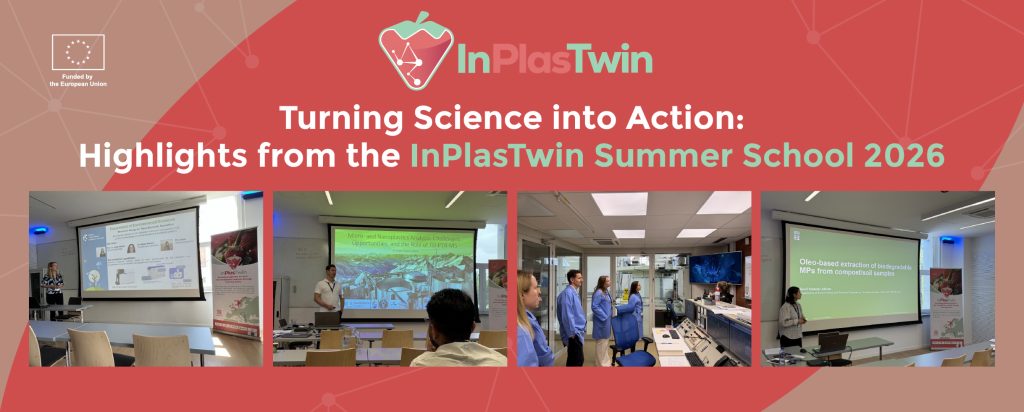
The Summer School opened with a focus on quality assurance and quality control (QA/QC) in micro- and nanoplastic measurements. Dušan Materić (Helmholtz Centre for Environmental Research, UFZ, Germany) introduced participants to current analytical challenges and opportunities with a focus on Thermal Desorption–Proton Transfer Reaction–Mass Spectrometry and its examples across diverse environmental, food, and biological matrices, before leading an interactive workshop dedicated to understanding method performance through practical case studies. Rather than presenting QA/QC as a theoretical requirement, the workshop demonstrated why reliable analytical data forms the basis of credible scientific conclusions and evidence-based decision-making. Participants discussed contamination control, validation strategies and common analytical pitfalls that influence the quality and comparability of results.
The following days expanded this analytical foundation through lectures delivered by leading international experts covering the complete workflow of micro- and nanoplastics analysis across diverse environmental and food matrices. Quynh Nhu Phan Le (VITO, Belgium) presented best practices for soil sampling, sample preparation and quality assurance, while Sevil Vafadar Afshar (Technical University of Denmark) introduced innovative oleo-based extraction methods for biodegradable microplastics and later discussed the degradation of bioplastics in real-world environments. Fred Olav Libnau and André Marcel Bienfait (Institute of Marine Research, Norway) shared their expertise on the separation of microplastics from marine sediments, seafood sample preparation and high-throughput infrared microscopy. Participants were also introduced to advanced analytical technologies by Olga Novillo Sanjuan (Technical University of Denmark), Milica Velimirovic Fanfani, Xiaoyu Zhang (VITO, Belgium), and Janja Vidmar (Jožef Stefan Institute), who presented state-of-the-art approaches including LDIR, multi-method analytical workflows, pyrolysis-GC-MS, and single particle ICP-MS for the detection and characterization of increasingly smaller plastic particles, respectively. The programme further explored environmental impacts and science communication through lectures by Nanna B. Hartmann (Technical University of Denmark), Špela Železnikar (University of Ljubljana) and Bina Bhattarai (Technical University of Denmark), covering public communication of science, ecotoxicological testing, agricultural microplastics and the chemical safety assessment of plastic food contact materials, respectively. Beyond the lectures, participants also visited the laboratories of the Department of Environmental Sciences at the Jožef Stefan Institute and the TRIGA reactor centre, gaining first-hand insight into advanced research infrastructure supporting environmental science
The Science-Policy-Practice Lab: Where research meets reality
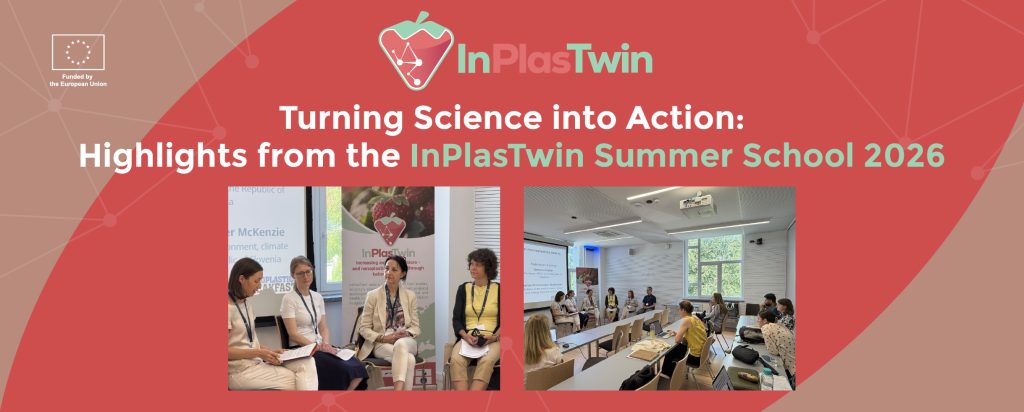
While the Summer School offered outstanding scientific content throughout the week, its most distinctive feature came during the final day with the Science-Policy-Practice Lab: From Microplastics Data to Real-World Action.
Organized in collaboration with Microplastics for Breakfast and moderated by Andreja Palatinus, this interactive session deliberately moved beyond laboratory methods and analytical performance. Instead, it addressed one of the most important questions currently facing environmental research:
How does microplastics science actually reach policy and practice beyond papers, projects and conference talks?
Rather than focusing solely on scientific achievements, the discussion explored what happens after research results are generated. How can analytical data support environmental monitoring? How can it contribute to legislation and regulatory processes? What makes scientific evidence useful for decision-makers? And how can researchers communicate their findings more effectively to institutions responsible for implementing environmental policies?
What made this session particularly valuable was the diversity of perspectives represented around the table. Alongside researchers, the panel brought together representatives from organizations directly involved in environmental monitoring, chemicals regulation, policymaking and implementation, including:
- Dr Manca Kovač Viršek – National Institute of Biology
- Elizabeta Gabrijelčič – Slovenian Environment Agency
- Simona Fajfar – Chemicals Office of the Republic of Slovenia
- Janja Kreitmeyer McKenzie – Ministry of the Environment, Climate and Energy / Global Plastics Treaty process
- Gašper Šubelj – Okolys
The discussion emphasized that scientific excellence alone does not automatically translate into societal impact. Instead, participants explored the concept of boundary infrastructure, the structured relationships, communication channels and collaborative processes that enable scientific knowledge to inform monitoring programmes, regulatory frameworks and evidence-based policymaking. The session highlighted that producing reliable data is only the first step; equally important is ensuring that these data are understandable, comparable and relevant to those making decisions.
Designed as a hybrid, highly interactive workshop, the Science–Policy–Practice Lab encouraged active participation from both on-site and online attendees through live questions and moderated discussions. Rather than providing simple answers, it created an honest dialogue about current barriers, knowledge gaps and practical opportunities for strengthening cooperation between science, public institutions and industry. It concluded by challenging participants to reflect on what must change over the next five years for micro- and nanoplastics research to deliver measurable environmental impact.
Looking ahead
The InPlasTwin Summer School demonstrated that addressing micro- and nanoplastic pollution requires much more than technological innovation. It demands robust analytical methodologies, harmonized quality assurance, interdisciplinary collaboration and, above all, stronger connections between researchers, regulators, industry and society.
By combining advanced scientific training with practical discussions on policy implementation and stakeholder engagement, the Summer School provided participants with not only technical expertise but also a broader understanding of how scientific knowledge can contribute to solving real-world environmental challenges.
As the field of micro- and nanoplastics continues to evolve, initiatives such as the InPlasTwin Summer School contribute to preparing the next generation of scientists and professionals – not only to generate high-quality data, but also to ensure that those data become meaningful evidence capable of supporting better policies, improved environmental monitoring and more sustainable decision-making.
For more updates, visit our Newsroom and follow us on LinkedIn.