From Research to Policy for Healthier Agricultural Soils: InPlasTwin and MINAGRIS Join Forces
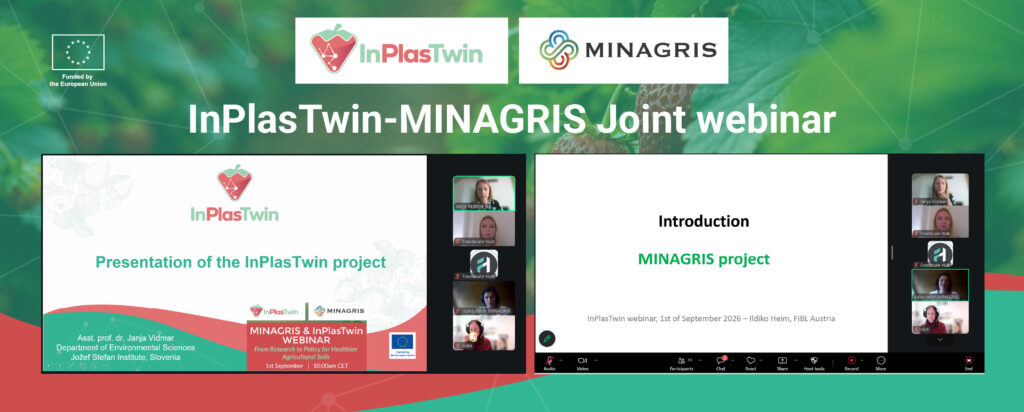
On 1 September 2026, the InPlasTwin and MINAGRIS projects joined forces for the webinar “From Research to Policy for Healthier Agricultural Soils”, bringing together researchers and experts to discuss one increasingly important challenge: how can scientific evidence help improve the sustainable management of plastics in agriculture?
The 90-minute webinar connected research on biodegradable plastics, microplastics in agricultural soils, sustainability assessment, policy recommendations and citizen science, creating a space for exchange between two Horizon Europe projects working towards healthier and more sustainable soils.
Connecting InPlasTwin and MINAGRIS
The webinar opened with Gordana Racić from Future Systems Hub, who welcomed participants and introduced the objectives of the event and the collaboration between the two projects.
Janja Vidmar from the Jožef Stefan Institute introduced the InPlasTwin project, while Ildikó Heim from FiBL Austria presented MINAGRIS, providing participants with an overview of the complementary research activities behind the joint webinar.
The collaboration offered an opportunity to look at agricultural plastics from different but interconnected perspectives – from analytical research and the behaviour of biodegradable materials to sustainability assessment, policy and public participation.
What happens to biodegradable plastics in agricultural soils?
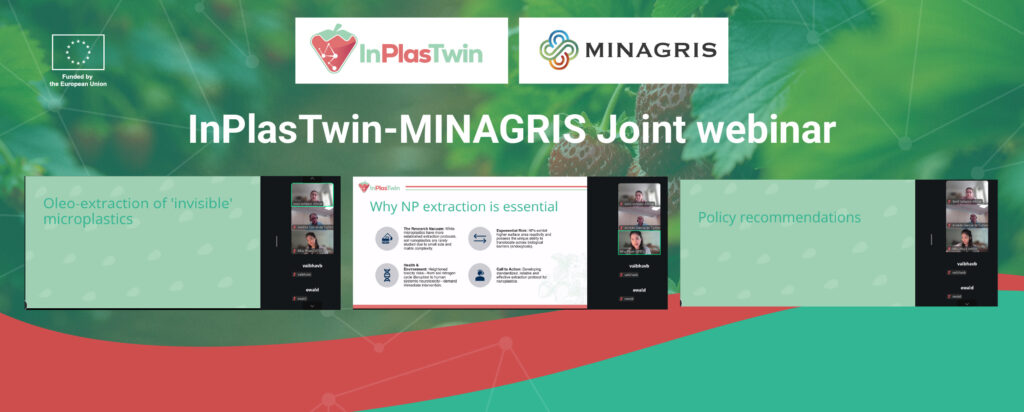
The first scientific session brought together Nanna Bloch Hartmann and Sevil Vafadar Afshar from DTU and Nhu Phan from VITO to present “Biodegradable Plastics in Agricultural Soils: Key Research Results on Degradation, Extraction and Policy Implications.”
The session explored some of the key questions surrounding biodegradable plastics used in agriculture. Understanding their environmental performance requires more than knowing whether a material is labelled biodegradable. Researchers also need reliable approaches to investigate how these materials degrade, whether microplastic particles are formed, and how such particles can be extracted and analysed in complex soil matrices.
By connecting degradation research with analytical challenges and broader policy implications, the session highlighted why robust scientific evidence is essential for assessing the environmental performance of agricultural plastics and supporting informed decisions about their use.
From scientific evidence to sustainability and policy
The perspective then broadened from individual materials and analytical methods to the wider sustainability of agricultural plastics.
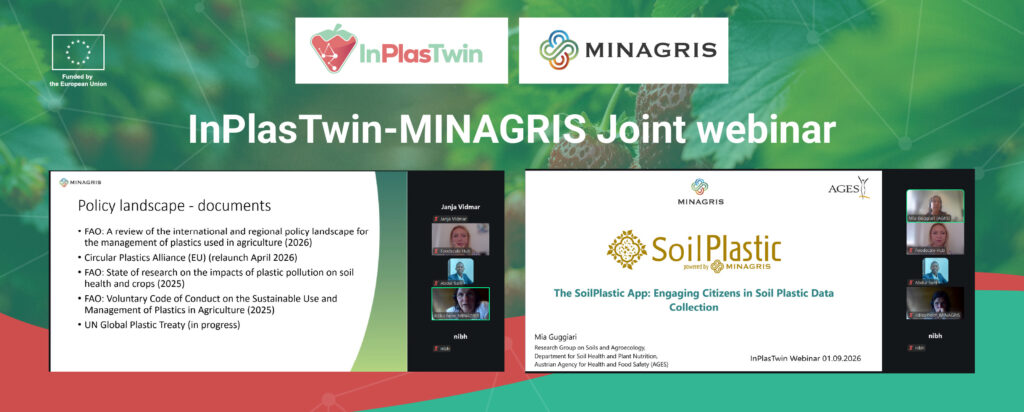
Ildikó Heim from FiBL Austria presented “Sustainability Assessment and Policy Recommendations to Mitigate the Impacts of Agricultural Plastics.”
Her contribution demonstrated the importance of translating research findings into approaches that can support more sustainable plastic management. Scientific evidence on the occurrence, behaviour and impacts of agricultural plastics can provide an important foundation for identifying mitigation measures and developing policy recommendations.
This connection between research and implementation was one of the central themes of the webinar: generating scientific knowledge is essential, but ensuring that this knowledge can contribute to practical and policy responses is equally important.
Engaging citizens in understanding soil plastic pollution
Plastic pollution in soils is not only a challenge for researchers and policymakers. Citizens can also contribute to improving our understanding of where plastic pollution occurs.
Mia Guggiari Dworatzek from AGES Austria presented the SoilPlastic App, an approach designed to engage citizens in collecting information about plastics found in soils.
Citizen science can complement scientific monitoring while simultaneously increasing public awareness of soil plastic pollution. By involving people directly in data collection, tools such as the SoilPlastic App can help build connections between research, environmental observation and society.
Building synergies for healthier agricultural soils
The joint webinar demonstrated the value of collaboration between European research projects addressing different dimensions of the same environmental challenge.
For InPlasTwin, understanding the behaviour and detection of micro- and nanoplastics – including those originating from biodegradable materials – is central to generating reliable evidence about their presence and fate in agricultural and food systems. MINAGRIS contributes a complementary perspective by investigating the impacts of plastic debris in agricultural soils and considering pathways towards more sustainable management.
Bringing these perspectives together helps move the discussion from research to policy – and from understanding the problem towards identifying possible solutions.
Continued collaboration, harmonised approaches, knowledge exchange and dialogue among researchers, policymakers, industry, farmers and citizens will be essential to support healthier agricultural soils and more sustainable use of plastics in agriculture.