InPlasTwin at SETAC 2026
InPlasTwin at SETAC Maastricht: Advancing Research on Agricultural Plastics and Their Environmental Impacts
The InPlasTwin project was represented at the SETAC Europe 36th Annual Meeting in Maastricht, the Netherlands, held under the theme “Embrace the Outlier: In Science, Regulations and Networks.” Organised by the Society of Environmental Toxicology and Chemistry (SETAC), the conference provided an international platform for scientists, environmental professionals, and other stakeholders to exchange knowledge, discuss emerging environmental challenges, and strengthen collaboration between science and regulatory practice. InPlasTwin researchers contributed to the scientific programme by presenting ongoing research on the environmental fate and potential impacts of conventional and biodegradable plastic mulching films used in agriculture.
Understanding the Environmental Fate of Agricultural Mulching Films
One of the conference highlights was the Topical Discussion “Detection, degradation, risks and sustainability of agricultural and biodegradable plastics in soil.”
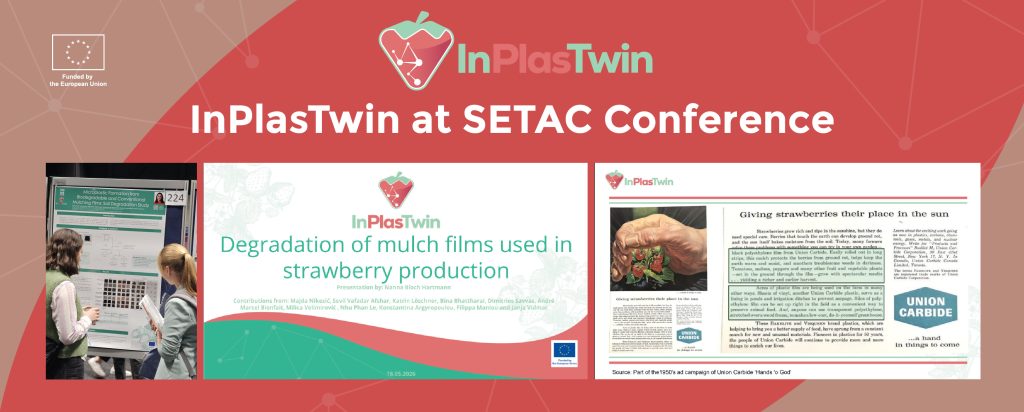
During this discussion, Nanna Bloch Hartmann, representing the InPlasTwin project, presented research addressing the degradation of plastic mulching films in soil and the formation of micro- and nanoplastics under realistic agricultural conditions. Her contribution highlighted important differences between conventional and biodegradable mulching materials, particularly regarding their degradation behaviour and environmental fate.
Although biodegradable plastics are increasingly considered as alternatives to conventional agricultural plastics, their environmental performance depends on several factors, including material composition and prevailing soil conditions. Understanding how these materials behave during and after agricultural use is therefore essential for evaluating their long-term sustainability. The discussion provided an opportunity to exchange perspectives on analytical approaches, degradation processes, environmental risks, and the challenges associated with assessing biodegradable plastics under realistic conditions.
Presenting Research on Microplastic Formation in Agricultural Soils
InPlasTwin research was also presented by Sevil Afshar, who contributed a scientific poster entitled: “Microplastic Formation from Biodegradable and Conventional Mulching Films: Soil Degradation Study.”
The poster addressed the degradation of agricultural mulching films and the associated formation of microplastics in soil, contributing to a better understanding of how different plastic materials behave in agricultural environments. The research is particularly relevant to the growing interest in biodegradable alternatives to conventional plastic mulching films. Assessing their environmental performance requires not only examining degradation processes but also investigating the potential formation and persistence of smaller plastic particles. By comparing biodegradable and conventional mulching films, InPlasTwin aims to contribute scientific evidence supporting more informed decisions regarding the use and management of plastic materials in agriculture.
Connecting Scientific Evidence with Pollution Prevention Solutions
Beyond presenting project research, Nanna Bloch Hartmann also chaired the conference session “Solutions from Source to Sink: Preventing, Removing, and Managing Pollution Across the Plastic Continuum.”
The session brought attention to solution-oriented approaches to plastic pollution, considering technological, ecological, regulatory, and behavioural perspectives. This broader discussion is closely aligned with the objectives of InPlasTwin, which seeks to improve scientific understanding of the environmental implications of agricultural plastics and support evidence-based approaches to their assessment and management. Addressing plastic pollution requires an integrated perspective that considers the entire lifecycle of plastic materials, from their production and application to degradation, environmental release, and potential impacts on ecosystems.
Strengthening Scientific Exchange and Future Collaboration
Participation in SETAC Maastricht provided an opportunity for InPlasTwin researchers to share ongoing work, receive feedback from the international scientific community, and establish connections with researchers working on related environmental challenges.
The discussions reinforced the importance of combining advanced analytical techniques, realistic experimental conditions, and ecotoxicological assessments to better understand the environmental behaviour of conventional and biodegradable agricultural plastics. Through its participation in international scientific events such as SETAC Maastricht, InPlasTwin continues to contribute to the exchange of knowledge on micro- and nanoplastics, agricultural sustainability, and environmental risk assessment.
We thank the conference organisers, participants, and fellow researchers for the valuable discussions and opportunities for scientific exchange. We look forward to building on these connections and continuing the dialogue through future research activities and collaborations.
Follow InPlasTwin for further updates on our research, scientific publications, and upcoming activities.